
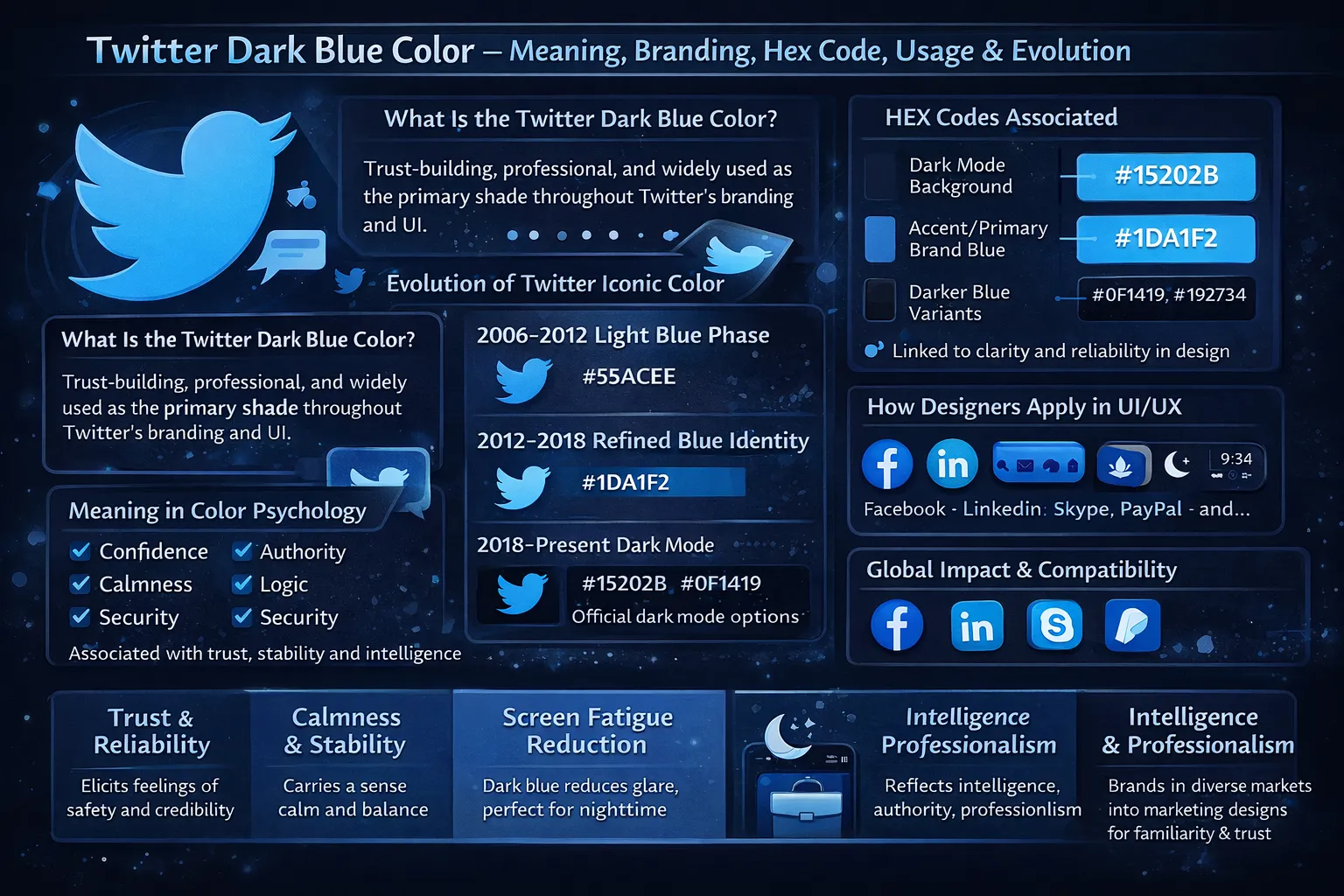
The twitter dark blue color has become one of the most recognizable digital branding elements in the modern world. From its earliest design days to the latest interface updates, this iconic color has shaped how users identify the platform, interact with the interface, and perceive the brand’s identity. Whether you are a designer, marketer, UI/UX professional, social media strategist, or simply curious about color psychology, understanding the history and significance of the twitter dark blue color helps you appreciate why it remains a powerful visual symbol worldwide.
What Is the Twitter Dark Blue Color?
The twitter dark blue color is the primary shade used across the platform’s branding, UI themes, and logo variations. Although Twitter has experimented with several tones of blue over the years, the dark blue tone stands out for its clarity, trust-building effect, and modern appearance. It reflects professionalism and simplicity, which aligns with Twitter’s communication-focused purpose.
Most designers describe the shade as a rich, deep blue with strong saturation and minimal brightness. Depending on the year and branding update, the twitter dark blue color is often referenced with hex codes like #15202B (for interface) and #1DA1F2 (for brand identity), though exact values can vary across dark mode, web, and mobile apps.
Why Brands Use Dark Blue in Digital Interfaces
The twitter dark blue color is not just a random choice; it is rooted in color psychology and user behavior. Dark blue is widely associated with:
- Trust
- Reliability
- Calmness
- Stability
- Intelligence
- Professionalism
In the digital world, blue tones make users feel comfortable and secure. That is why many global tech platforms use blue—Facebook, LinkedIn, PayPal, Skype, and Twitter included. The twitter dark blue color is particularly effective in reducing glare, improving contrast, and making long-duration reading easier.
Evolution of Twitter’s Brand Colors
To understand the importance of the twitter dark blue color, it helps to look at how Twitter’s branding has changed over time.
1. Early Light Blue Phase (2006–2012)
Twitter started with a lighter sky-blue theme. The logo, interface, and branding used bright and cheerful shades to reflect fun and casual communication.
2. Refined Blue Identity (2012–2018)
The platform matured, the branding became cleaner, and a richer blue was introduced. This stage marked the beginning of darker tones in headers and layout designs.
3. Dark Mode Integration (2018–Present)
With the UI demand for dark themes increasing globally, Twitter introduced official dark mode options:
- Dim Mode – dark gray with blue accents
- Lights Out Mode – almost black background with blue highlights
Here, the twitter dark blue color became even more prominent, offering contrast and eye comfort.
UI/UX Impact of the Twitter Dark Blue Color
From a design perspective, the twitter dark blue color plays several important roles:
1. Visual Hierarchy
The color helps differentiate primary actions like:
- Follow
- Tweet
- Save changes
- Notifications
2. Readability
Blue contrasts well with white and black, ensuring that text, buttons, and icons remain readable in different lighting conditions.
3. Screen Fatigue Reduction
Users spend hours scrolling on social platforms. Dark blue reduces glare, especially in night mode, making the interface more comfortable.
4. Emotional Response
Studies show that blue tones reduce stress and help users stay focused, which is ideal for fast-paced information environments like Twitter.
Hex Codes Associated with the Twitter Dark Blue Color
While the shade varies slightly depending on device and mode, common hex values associated with the twitter dark blue color include:
| Element | Hex Code |
| Dark Mode Background | #15202B |
| Accent/Primary Brand Blue | #1DA1F2 |
| Darker Blue Variants | #0F1419, #192734 |
Designers use these codes in:
- UI mockups
- Branding projects
- Iconography
- Social media templates
- App prototypes
Having consistent color values ensures branding uniformity across web, mobile, and marketing materials.
Why the Twitter Dark Blue Color Works in Global Markets (GEO Focus)
Colors carry cultural meaning, and the twitter dark blue color performs well globally because:
✔ Universally Safe
Blue is considered neutral and widely accepted across cultures.
✔ Professional Appeal
In regions like the US, UK, UAE, India, and Europe, blue is linked to professionalism.
✔ Digital Comfort
In warm or bright climates (UAE, India), dark mode reduces eye strain and heat visibility on screens.
✔ Local Trend Adaptability
Brands in diverse markets adapt Twitter’s blue tones into marketing designs for familiarity and trust.
This GEO adaptability is a major reason the twitter dark blue color has maintained long-term relevance.
Color Psychology Behind the Twitter Dark Blue Color
Color influences emotion and decision-making. The dark blue tone communicates:
- Confidence
- Authority
- Logic
- Safety
- Calmness
- Security
For a platform built around communication, quick updates, and often sensitive discussions, these psychological associations strengthen user trust. The twitter dark blue color subtly assures users that the platform is stable, credible, and serious enough to host global conversations.
How Designers Apply the Twitter Dark Blue Color in Creative Projects
Designers often integrate the twitter dark blue color into:
1. Social Media Templates
You’ll see blue accents in:
- Quote posts
- Tweet screenshots
- Promotional graphics
2. Brand Style Guides
Many companies mimic Twitter’s blue to maintain visual harmony in cross-platform marketing.
3. Web and Mobile UI
App developers integrate blue shades for:
- Navigation bars
- Icons
- Buttons
4. Digital Ads
Ads themed using blue shades often perform better due to familiarity and trust factors.
The versatility of the twitter dark blue color allows it to blend well with whites, grays, and blacks for a modern look.
Twitter Dark Blue Color in Dark Mode and Its Popularity
Dark mode has become a global trend, and Twitter’s early adoption helped normalize it. The twitter dark blue color plays an essential role in:
- Enhancing contrast
- Reducing eye strain
- Improving readability
- Creating a sleek modern interface
- Supporting OLED battery optimization
Users frequently report that dark mode makes browsing more comfortable, especially during nighttime and extended usage sessions.
Future of Twitter’s Color Branding
Brand colors may evolve, but the twitter dark blue color is unlikely to disappear completely because:
- It is already deeply associated with the brand
- Users recognize it instantly
- It works well in both light and dark themes
- It supports accessibility and readability
- It scales across apps, web, and media
Even if new variations appear, the foundational dark blue shade will likely remain part of the core identity.
Final Thoughts
The twitter dark blue color is more than just a design choice—it is a powerful symbol of trust, clarity, and global recognition. From branding and UI/UX design to color psychology and cultural acceptance, this deep blue shade plays a crucial role in shaping how users experience the Twitter platform. Whether you are designing digital products, managing social media, or studying branding, understanding the function and impact of this color helps you appreciate why it remains so influential worldwide.