
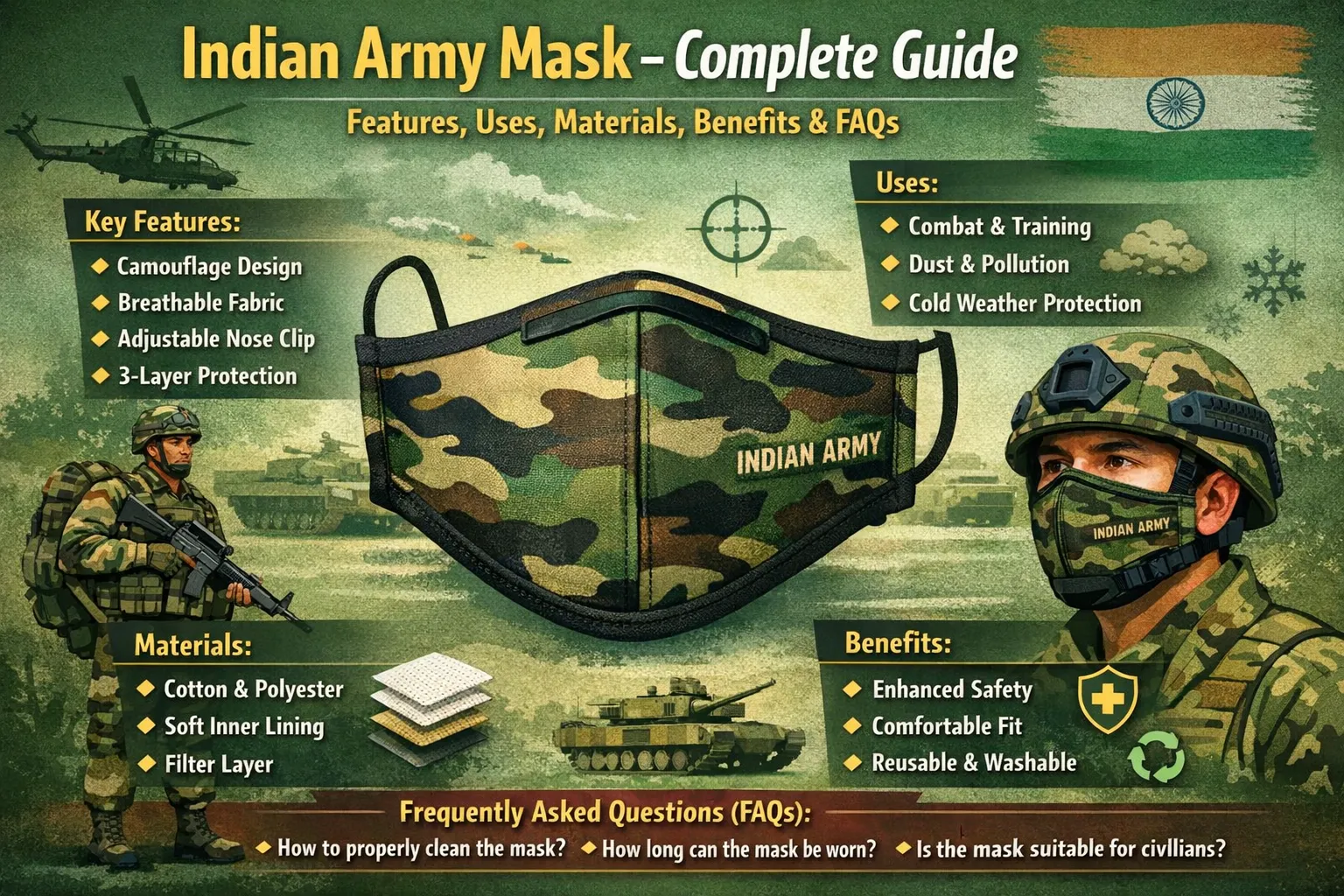
Protection, durability, and tactical efficiency are essential for armed forces, especially during challenging missions and extreme environments. One of the important protective accessories used by soldiers is the Indian Army mask. Whether for dust protection, camouflage, high-altitude weather, or anti-pollution needs, this mask is designed with advanced materials and military-grade construction. This complete guide provides a detailed explanation of its features, uses, benefits, materials, maintenance tips, and frequently asked questions.
What Is an Indian Army Mask and Why Is It Used?
An Indian Army mask (1) is a specially designed face protection gear used by military personnel during field operations, training exercises, and hostile environmental conditions. It is developed to provide safety from dust, pollution, germs, extreme weather, and sometimes chemical exposure depending on the mask type.
The mask is used because:
- Soldiers need breathable yet durable protection
- It shields the nose and mouth during rugged missions
- It keeps dust, debris, and pollution away
- It offers camouflage and tactical advantage
- It supports respiratory comfort in extreme climates
The Indian Army uses different types of masks depending on the purpose and mission requirement.
What Are the Types of Indian Army Masks Available?
There are several variations of the Indian Army mask (2), each developed for a specific use-case. The primary types include:
1. Camouflage Tactical Mask
Designed with army camo patterns to blend with the environment during field missions.
2. Anti-Pollution Mask
Used in urban areas or high-dust zones to protect soldiers from pollution and harmful particles.
3. Cold-Weather Mask
Perfect for high-altitude regions like Siachen and Ladakh where temperatures drop below freezing.
4. Combat Gas Mask
Used for chemical protection and includes advanced filters.
5. Balaclava Army Mask
Covers the entire head and neck, useful for protection against cold, dust, and sun exposure.
Each type plays an important role in military preparedness and operational safety.
What Materials Are Used to Make an Indian Army Mask?
High-performance textiles and protective materials go into making an Indian Army mask (3). Common materials include:
- Cotton-blend fabric – breathable and skin-friendly
- Nylon or polyester – durable and resistant to wear
- Activated carbon filters – used in anti-pollution variants
- Thermal fleece lining – used in winter masks
- High-grade rubber and silicone – used for gas masks
These materials ensure protection while maintaining comfort and breathability during long usage.
How Does an Indian Army Mask Provide Protection?
Many people wonder how an Indian Army mask (4) ensures high-level safety. The mask provides protection through:
Multiple Layers
Different layers block dust, pollutants, germs, and airborne particles.
Filter Technology
Advanced masks include N95 or activated carbon filters for better filtration.
Weather Resistance
Special masks protect against wind, cold, heat, and sandstorms.
Ergonomic Design
The fit ensures the mask stays secure during movement and heavy activity.
Breathability
Strategic air vents maintain airflow without compromising protection.
Combined, these features allow soldiers to maintain focus and comfort even in challenging environments.
How to Use and Wear an Indian Army Mask Properly?
To get maximum protection, the Indian Army mask (5) must be worn correctly. Follow these steps:
- Place the mask over your nose and mouth.
- Adjust the straps for a snug yet comfortable fit.
- Ensure there are no gaps around the sides.
- If using a filter mask, check that the filter is properly inserted.
- Avoid touching the mask while wearing it.
- Wash or clean the mask after use if it is reusable.
Proper usage ensures durability, hygiene, and maximum protection.
What Are the Key Features of an Indian Army Mask?
A modern Indian Army mask (6) comes with several high-performance features:
- Breathable multi-layer construction
- Adjustable straps for secure fit
- Sweat-resistant inner lining
- High-durability stitching
- Washable and reusable materials
- Tactical camouflage designs
- Filter compartments in premium variants
- Weather-specific configurations
These features make the mask suitable for both military and civilian use.
Where Is an Indian Army Mask Used?
The Indian Army mask (7) is used in various environments and operational conditions:
1. High-Altitude Regions
Protects against freezing winds and low oxygen.
2. Desert Areas
Shields the face from sandstorms and heat.
3. Urban Zones
Helps filter pollution and smoke.
4. Training Grounds
Used during rigorous physical activities.
5. Combat Situations
Certain masks offer battlefield protection.
6. Pandemic or Flu Situations
Used for health safety and hygiene.
Its versatility makes it essential for multiple environments.
How to Clean and Maintain an Indian Army Mask?
To maintain durability, the Indian Army mask (8) must be cleaned properly. The maintenance method depends on the type:
For Fabric Masks
- Wash with mild detergent
- Air dry, do not use high heat
- Avoid bleaching chemicals
For Filter Masks
- Replace filters regularly
- Do not wash the filter
- Wipe the outer surface gently
For Gas Masks
- Clean the rubber areas
- Check for cracks or leaks
- Replace cartridges as required
Proper maintenance ensures hygiene and long-term usability.
Can Civilians Use an Indian Army Mask?
Yes, civilians can also use an Indian Army mask (9), especially for:
- Bike riding
- Trekking
- Pollution protection
- Fitness activities
- Cold-weather travel
- Tactical sports
- Camping and outdoor use
Many replicas and civilian versions are available online and in stores.
What Should You Consider Before Buying an Indian Army Mask?
Before purchasing, consider these factors:
- Purpose (dust, pollution, cold, tactical use)
- Material quality
- Breathability and comfort
- Strap adjustability
- Filter capacity
- Weather suitability
- Durability
- Price and authenticity
A certified or original Indian Army mask (10) ensures better protection compared to low-quality alternatives.
Frequently Asked Questions (FAQs)
1. Is the Indian Army mask waterproof?
Some models are water-resistant, especially winter and tactical versions.
2. Do Indian Army masks include filters?
Anti-pollution variants include replaceable filters, while basic masks do not.
3. Are these masks safe for long-term use?
Yes, they are designed for extended usage, especially during long missions.
4. Can I wash the Indian Army mask daily?
Fabric masks can be washed daily, but filter masks require careful handling.
5. Is the camouflage design only for military use?
No, camo versions are also available for civilians in non-restricted patterns.
Conclusion
The Indian Army mask is an essential protective gear designed for durability, comfort, and safety across diverse environments. From high-altitude missions to dusty terrains, these masks ensure soldiers stay protected without compromising performance. Whether for military use or daily civilian activities, understanding its features, types, materials, and care methods helps you choose the right variant for your needs.