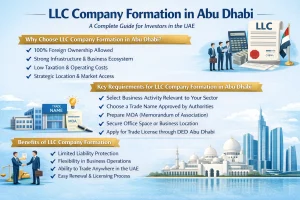

Everything entrepreneurs and investors need to know
Starting a business in Abu Dhabi is one of the most rewarding decisions for entrepreneurs looking to enter the Middle East market. As the capital of the UAE, Abu Dhabi offers unmatched infrastructure, strategic global connectivity, investor-friendly regulations, and 100% foreign ownership across most business sectors.
This 2026 Business Setup Guide will walk you through every major step — from selecting a business structure to obtaining your trade license and launching operations.
Why Start a Business in Abu Dhabi?
Abu Dhabi is now considered one of the world’s fastest-growing business hubs thanks to:
✔ 100% foreign ownership in most sectors
Entrepreneurs no longer need a UAE local sponsor for the majority of business activities.
✔ Zero personal & capital gains tax
Corporate tax applies only to companies exceeding certain profit thresholds.
✔ World-class infrastructure
Free zones, industrial clusters, digital government systems, and advanced logistics.
✔ Strong economic stability
Backed by Vision 2030 diversification initiatives.
✔ Residency visas for investors & employees
Starting a business allows you to secure UAE residency for yourself and your family.
Step-by-Step Guide: How to Start a Business in Abu Dhabi (2026)
Step 1: Decide the Type of Business Activity
Your business activity determines:
- Licensing authority
- Required approvals
- Cost structure
- Eligibility for mainland or free zone
Common business categories:
- Commercial (trading)
- Professional (consulting, services)
- Industrial (manufacturing)
- Tourism
- E-commerce
- Real estate
- Technical services
Tip: Each activity must match Abu Dhabi DED (Department of Economic Development) classifications.
Step 2: Choose Your Company Structure
Abu Dhabi offers multiple company types depending on your goals:
1. Mainland Company (DED License)
- Operate anywhere in UAE
- Best for retail, restaurants, event companies, consultancies
- 100% foreign ownership allowed for most activities
2. Free Zone Company
Perfect for international trade, digital businesses, and exporters.
Top free zones in Abu Dhabi:
- ADGM (Abu Dhabi Global Market)
- Masdar City
- KIZAD
- Abu Dhabi Airport Free Zone
- TwoFour54
3. Offshore Company
Mainly for holding assets & international operations.
Step 3: Reserve Your Trade Name
Your trade name must follow DED rules:
✔ Not similar to an existing company
✔ Matches your business activity
✔ No offensive or religious words
✔ Can include your name if needed
Once accepted, the trade name is reserved for 6 months.
Step 4: Get Initial Approval
Initial approval indicates that the Abu Dhabi government has no objection to you starting the business.
This includes:
- Investor passport copies
- Business plan for certain activities
- Activity-specific approvals (if required)
At this stage, you can proceed with MOA drafting and site selection.
Step 5: Prepare the Legal Documents
Depending on your structure, you will need:
✔ MoA (Memorandum of Association)
For LLCs
✔ Local Service Agent Agreement
For professional licenses
✔ Shareholder agreements
If multiple partners are involved
Documents often need notarisation.
Step 6: Choose a Business Location
Every Abu Dhabi business must have a physical business address.
Options include:
- Mainland office (flexi-desk or full office)
- Free zone office
- Warehouse or industrial facility
- Virtual office (allowed in some free zones)
Tip: Abu Dhabi free zones offer affordable flexi-desk options ideal for startups.
Step 7: Submit Documents & Pay License Fees
Once all documents are ready, submit them to the relevant authority:
- Abu Dhabi DED (for mainland businesses)
- Free zone authority (for free zone setup)
You will receive:
✔ Trade License
✔ Establishment Card
✔ Company Registration Certificates
Step 8: Apply for Investor & Employee Visas
After getting your trade license, you can apply for:
- Investor visa
- Partner visa
- Employee visas
- Family visas
Residency visas range from 1 to 10 years, depending on eligibility.
Step 9: Open a Corporate Bank Account
Banks in Abu Dhabi require:
- Passport copies
- UAE residency visa
- Trade License
- Company documents
- Business plan (for certain sectors)
Popular UAE banks:
- ADCB
- ADIB
- Emirates NBD
- FAB
- Mashreq
- WIO
Free zone companies may need additional compliance checks.
Step 10: Begin Operations
Once your:
✔ Trade license
✔ Visa
✔ Bank account
are approved, you can legally operate your business in Abu Dhabi.
Cost of Starting a Business in Abu Dhabi (2026)
Costs vary by structure:
Mainland Company
AED 12,000 – AED 25,000 (basic license)
Free Zone Company
AED 8,000 – AED 20,000 (startup package)
Industrial Company
AED 50,000+
(depends on warehouse, facility, and approvals)
Additional expenses:
- Visa fees
- Office rent
- Insurance
- Bank account setup
- Approvals
Documents Required to Start a Business in Abu Dhabi
- Passport copy
- Visa copy (if applicable)
- Passport-size photos
- Business activity selection
- Trade name choices
- MOA or LSA agreement
- Tenancy contract or office lease
Certain sectors need special approvals (media, health, engineering, etc.)
Mainland vs Free Zone: Which Should You Choose?
| Feature | Mainland | Free Zone |
| 100% foreign ownership | ✔ | ✔ |
| Operate in UAE market | ✔ | Limited without a distributor |
| Office required | Yes | Flexi-desk allowed |
| Cost | Medium | Low-Medium |
| Suitable for | Retail, services, restaurants | Digital business, trading, startups |
Common Mistakes to Avoid
❌ Choosing the wrong business activity
❌ Not understanding visa quotas
❌ Not comparing free zone packages
❌ Assuming all sectors allow 100% foreign ownership
❌ Selecting the wrong office type
Frequently Asked Questions (FAQ)
1. Can foreigners own 100% of a company in Abu Dhabi?
Yes, most sectors now allow full foreign ownership.
2. How long does the company formation process take?
3–10 working days depending on approvals.
3. What is the cheapest way to start a business in Abu Dhabi?
Free zone flexi-desk packages start as low as AED 8,000.
4. Do I need to be physically present?
For many free zones, no. But some mainland procedures require presence.
5. Can I start an online business in Abu Dhabi?
Yes — e-commerce licenses are available on both mainland and free zones.
Conclusion
Starting a business in Abu Dhabi in 2026 is easier than ever thanks to simplified regulations, government support, and investor-friendly licensing systems. Whether you are a startup founder, SME owner, or international investor, Abu Dhabi offers exceptional opportunities for growth and scalability.