
Have you ever taken a sip of ice-cold water or enjoyed a hot cup of coffee and felt a sudden twinge in your teeth? That discomfort is usually what we call tooth sensitivity, and while it can be annoying, it’s often manageable. But what happens when that twinge turns into a sharp, constant pain that keeps you up at night? That’s tooth pain, and it could signal a more serious problem that needs urgent attention.
If you live in Springtown and are wondering whether your discomfort requires a visit to an emergency dentist, this guide will help you understand the difference between tooth sensitivity and tooth pain, and when it’s time to act. At Frontier Dentistry in Springtown, Dr. Caroline Miller and our team see many patients who aren’t sure when to seek help. We want to help you make the right choice before a small problem becomes a serious one.
What is Tooth Sensitivity and How It Differs from Tooth Pain
The first step in protecting your teeth is understanding the difference between tooth sensitivity and tooth pain. Many people confuse the two, but knowing the difference can save you time, discomfort, and potentially prevent serious dental issues.
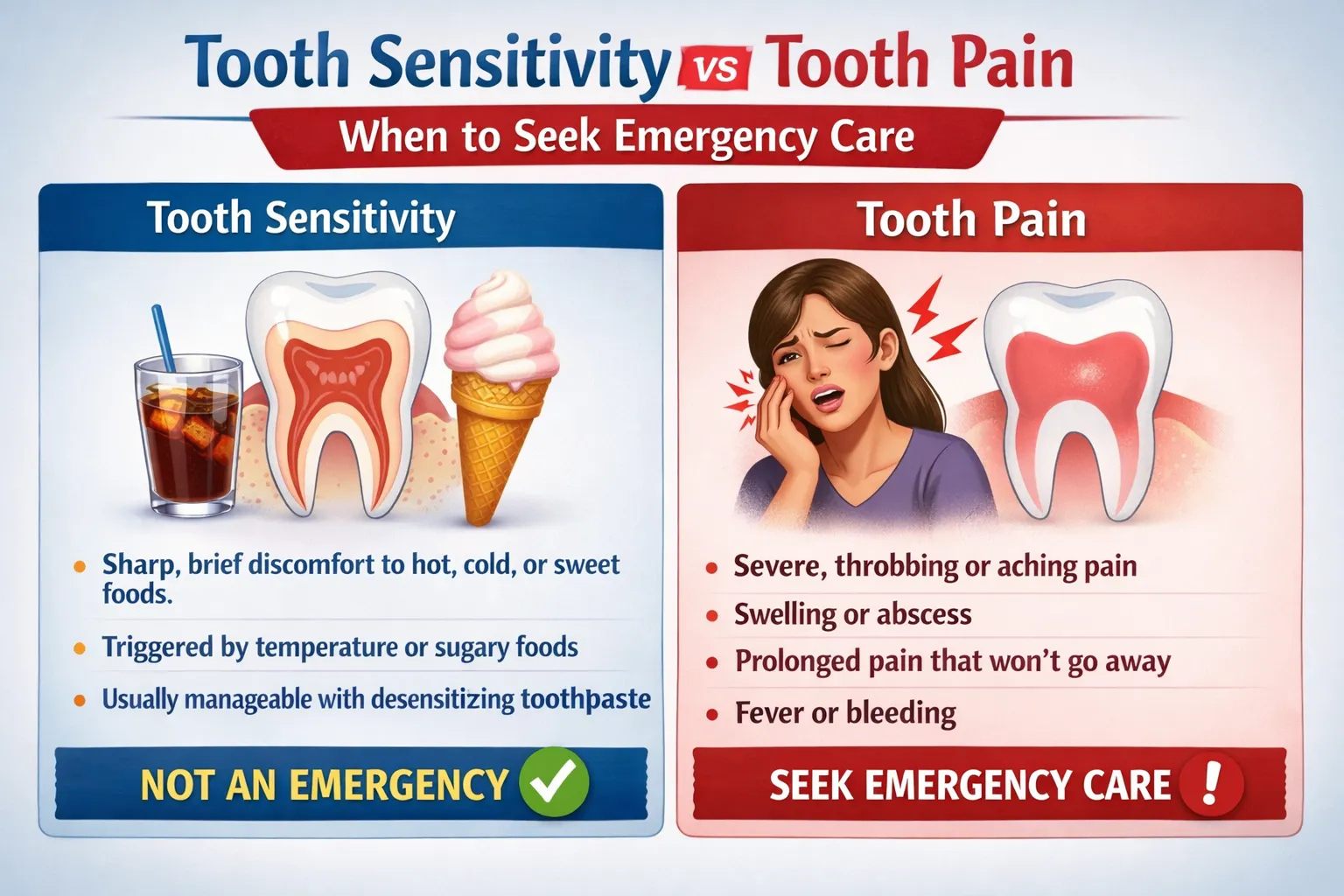
Tooth sensitivity is usually mild and short-lived. You might notice it when eating ice cream, drinking hot coffee, or brushing your teeth. This sensitivity often comes from worn enamel, receding gums, or teeth grinding. While it can be uncomfortable, it usually doesn’t indicate an urgent problem.
On the other hand, tooth pain is often more severe and persistent. It might feel like a constant throbbing, a sharp pinch when biting, or even a dull ache that keeps you awake. Pain of this nature can indicate cavities, infections, abscesses, or a cracked tooth. Ignoring it can make the problem worse, leading to more invasive treatments or even tooth loss.
“A 2019 study published in the Journal of Dental Research found that over 30% of adults experience some form of tooth sensitivity, while persistent tooth pain often signals the presence of an untreated cavity or infection.”
Common Causes of Tooth Sensitivity
Understanding why your teeth are sensitive is important for managing the problem. The most common causes include:
- Worn enamel: Over time, brushing too hard or using abrasive toothpaste can wear down the enamel.
- Gum recession: When gums pull back, the roots of your teeth may become exposed, causing sensitivity.
- Teeth grinding (bruxism): Many people grind their teeth at night, which can wear down enamel and lead to sensitivity.
- Minor cavities or plaque buildup: Early decay may cause occasional discomfort without noticeable pain.
If you notice sensitivity that is getting worse or lasts longer than a few weeks, it’s a good idea to contact a dentist office in Springtown to evaluate your teeth.
Common Causes of Tooth Pain
Tooth pain, unlike sensitivity, usually signals that something more serious is happening inside your tooth or gums. Common causes include:
- Deep cavities: When decay reaches the pulp of your tooth, it can cause severe pain.
- Dental abscess or infection: Infections can create throbbing pain, swelling, and even fever.
- Cracked or fractured teeth: A broken tooth may hurt when biting or chewing.
- Impacted wisdom teeth: These can push against other teeth, causing sharp discomfort.
At Frontier Dentistry in Springtown, Dr. Caroline Miller often sees patients who delayed care and later required emergency procedures. That’s why it’s crucial to listen to your teeth and act early.
When Tooth Pain Becomes a Dental Emergency
It’s not always easy to know when tooth pain requires immediate attention. Here’s what you should watch for:
- Severe, throbbing pain that doesn’t improve with over-the-counter pain medication
- Swelling of the gums, face, or jaw
- Fever alongside tooth pain, which may indicate infection
- Persistent sensitivity that gets worse over time
- Bleeding or pus near the tooth
If you notice any of these signs, you should contact an emergency dentist in Springtown TX immediately. Acting quickly can prevent complications and save your tooth.
Even tooth sensitivity can become an emergency if ignored. Minor enamel wear or a small cavity can quickly progress to infection if left untreated.
How to Manage Tooth Sensitivity at Home
While you wait for your appointment, there are steps you can take to relieve sensitivity:
- Use desensitizing toothpaste designed for sensitive teeth.
- Avoid extreme temperatures in food and drinks.
- Brush gently with a soft-bristled toothbrush.
- Limit acidic foods that can erode enamel.
Remember, these steps are temporary. A Dentist Office can provide long-term solutions like fluoride treatments, dental sealants, or custom mouthguards to prevent further damage.
How to Choose Right Emergency Dentist
Finding the right dentist for urgent care can feel overwhelming. Here’s what you should consider:
- Look for a clinic that offers extended hours and same-day appointments.
- Ensure they handle both tooth sensitivity and severe dental pain.
- Check reviews for trustworthiness and patient satisfaction.
- Confirm that they use modern diagnostic tools like digital X-rays and laser treatments.
FAQs
Can tooth sensitivity become an emergency?
Yes, especially if it worsens, lasts for more than a few weeks, or comes with swelling, fever, or sharp pain. Early treatment prevents serious problems.
Are there emergency dentists in Springtown available on weekends?
Yes, many local clinics, including Frontier Dentistry in Springtown, offer weekend and same-day appointments.
What should I do if a tooth suddenly hurts at night?
Rinse with warm salt water, take over-the-counter pain relief, and call your emergency dentist.
Can a small cavity lead to a dental emergency?
Yes. Untreated cavities can reach the nerve, causing severe pain, swelling, and infection.
Conclusion
Tooth sensitivity is common and often manageable, but persistent or severe tooth pain should never be ignored. You have access to reliable dental care, and reaching out early can prevent complications.
If you experience severe pain, swelling, or signs of infection, don’t wait. Contact an emergency dentist today.
Remember, your teeth deserve attention before discomfort turns into an emergency. A visit to a trusted dentist clinic in Springtown could save you time, money, and a lot of pain.