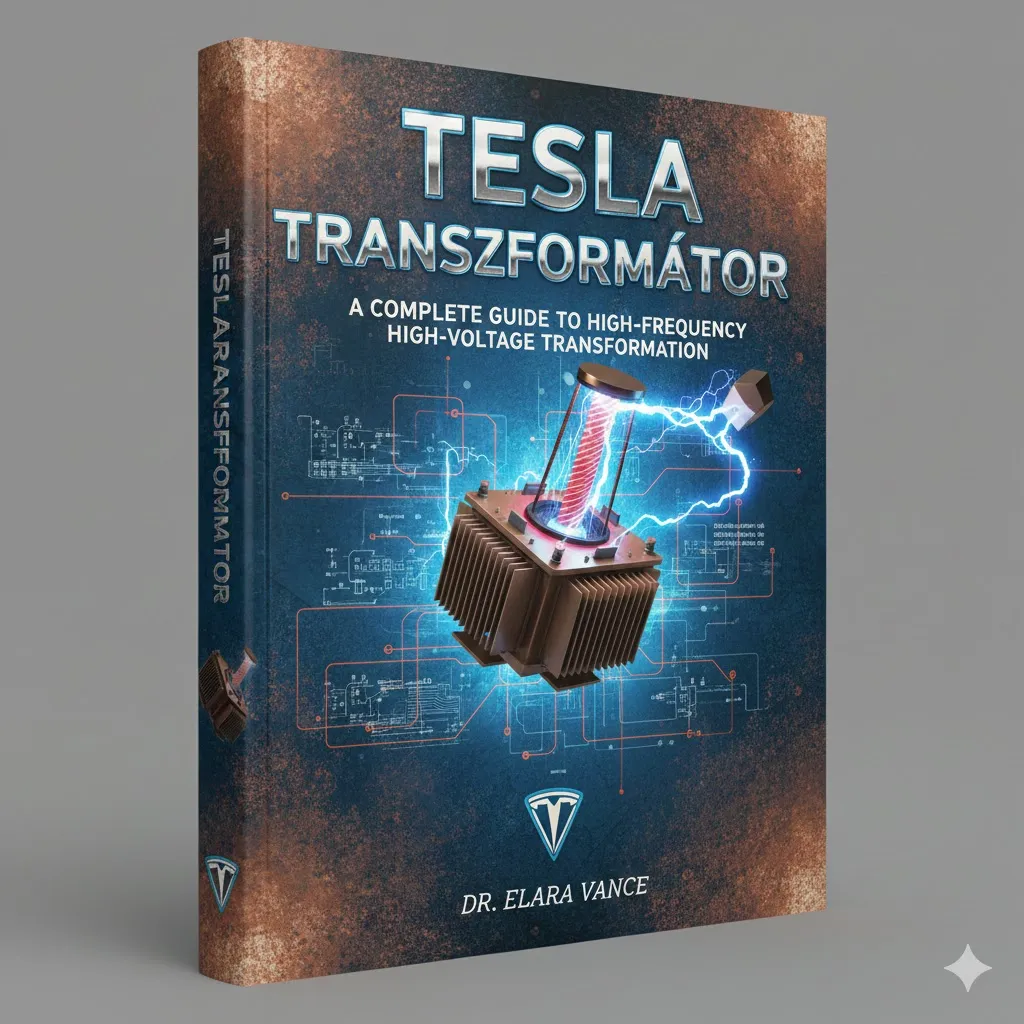
The Tesla transzformátor is one of the most fascinating electrical devices ever developed, combining scientific innovation, historical significance, and modern experimentation. Originally conceptualized by the visionary inventor Nikola Tesla, this device is widely known for its ability to generate extremely high voltages at high frequencies. Today, it continues to capture the imagination of engineers, physicists, hobbyists, and educators around the world.
This comprehensive guide explores the origins, working principles, components, types, applications, safety considerations, and modern relevance of the Tesla transzformátor in a clear and structured way.
What Is a Tesla Transzformátor?
A Tesla transzformátor is a specialized type of resonant transformer designed to produce very high-voltage, low-current, high-frequency alternating current. Unlike conventional transformers used in power transmission, this device operates using resonance between electrical components rather than magnetic coupling alone.
Its unique operation allows it to generate dramatic electrical discharges, often seen as long sparks or arcs in laboratory demonstrations and science exhibitions. While visually impressive, the underlying physics is equally remarkable.
Historical Background and Origin
The Tesla transzformátor was invented in the late 19th century by Nikola Tesla, one of the most influential electrical engineers and inventors in history. Tesla developed this technology during his experiments with wireless power transmission, radio frequency energy, and high-voltage electricity.
His early designs laid the foundation for many modern electrical systems, including radio communication and resonant circuits. Although Tesla’s ambitious vision of global wireless power transmission was never fully realized, his transformer design remains a cornerstone of electrical experimentation.
Working Principle Explained
The operation of a Tesla transzformátor is based on the principle of electrical resonance. Instead of transferring energy directly through iron cores, it relies on resonant circuits that oscillate at specific frequencies.
Key Operating Concepts:
- Resonance: Energy efficiently transfers between components when both primary and secondary circuits resonate at the same frequency.
- High-Frequency Alternating Current: Enables the generation of high voltage without requiring massive insulation.
- Electromagnetic Induction: Energy transfers between coils through changing magnetic fields.
The device typically consists of two coils—primary and secondary—each paired with a capacitor. When energized, oscillations build up, resulting in extremely high voltages at the output.
Main Components
Understanding the components of a Tesla transzformátor is essential for grasping how it functions:
1. Power Supply
Provides the initial electrical energy required to start the system.
2. Primary Coil
A low-turn, thick wire coil that receives energy from the power source.
3. Capacitor
Stores electrical energy and releases it rapidly into the primary coil.
4. Spark Gap (or Electronic Switch)
Controls the discharge of energy from the capacitor.
5. Secondary Coil
A high-turn, thin wire coil that steps up the voltage dramatically.
Each component must be carefully designed and tuned to ensure stable and efficient operation.
Types of Tesla Transzformátor
Over time, several variations of this device have been developed to improve performance, efficiency, and safety.
Spark-Gap Tesla Transformer
The original design using an air spark gap. It is simple, powerful, and popular among hobbyists.
Solid-State Tesla Transformer (SSTC)
Uses electronic switches instead of spark gaps, offering better control and reduced noise.
Dual Resonant Solid-State Tesla Transformer (DRSSTC)
An advanced version capable of producing very long electrical arcs with high efficiency.
Miniature Tesla Transformers
Designed for educational and demonstration purposes, operating at lower power levels.
Applications and Practical Uses
Although often associated with demonstrations, the Tesla transzformátor has real-world applications:
Educational Demonstrations
Used to teach principles of electromagnetism, resonance, and high-voltage engineering.
Scientific Research
Supports experiments involving plasma, dielectric testing, and electromagnetic fields.
Wireless Energy Experiments
Provides insights into non-contact energy transfer concepts.
Entertainment and Displays
Frequently featured in science museums, exhibitions, and live performances.
Advantages and Limitations
Advantages:
- Produces extremely high voltage
- Demonstrates resonance principles clearly
- No iron core required
- High-frequency operation
Limitations:
- Low overall energy efficiency
- Not suitable for continuous power delivery
- Requires careful tuning and safety measures
These characteristics make it ideal for experimentation rather than industrial power distribution.
Safety Considerations
Despite its low current output, a Tesla transzformátor can still be dangerous if mishandled.
Safety Guidelines:
- Maintain proper grounding
- Use protective equipment
- Keep safe distances during operation
- Avoid exposure to high-frequency electromagnetic fields
- Never operate near flammable materials
Strict adherence to safety practices is essential, especially in DIY or educational environments.
Modern Relevance and Future Outlook
In modern engineering, the Tesla transzformátor continues to influence research in high-frequency power electronics, wireless charging technologies, and electromagnetic compatibility testing. While it is not used for mainstream power transmission, its principles are embedded in many advanced systems.
Innovations in solid-state electronics have revitalized interest in Tesla’s original ideas, making the device more controllable, efficient, and accessible than ever before.
Frequently Asked Questions
How much voltage can it produce?
Depending on design, output can range from tens of thousands to several million volts.
Is it legal to build one?
In most regions, building one for educational or private use is legal, provided safety regulations are followed.
Can it power household appliances?
No, it is not designed for conventional power supply applications.
Conclusion
The Tesla transzformátor stands as a testament to Nikola Tesla’s genius and the enduring power of scientific curiosity. From its historical origins to its modern adaptations, it continues to serve as an invaluable educational and experimental tool. By combining high-voltage engineering with elegant physical principles, this device remains one of the most iconic creations in electrical science.
Whether you are a student, engineer, or enthusiast, understanding this remarkable transformer opens the door to deeper knowledge of resonance, electromagnetism, and innovation itself.