
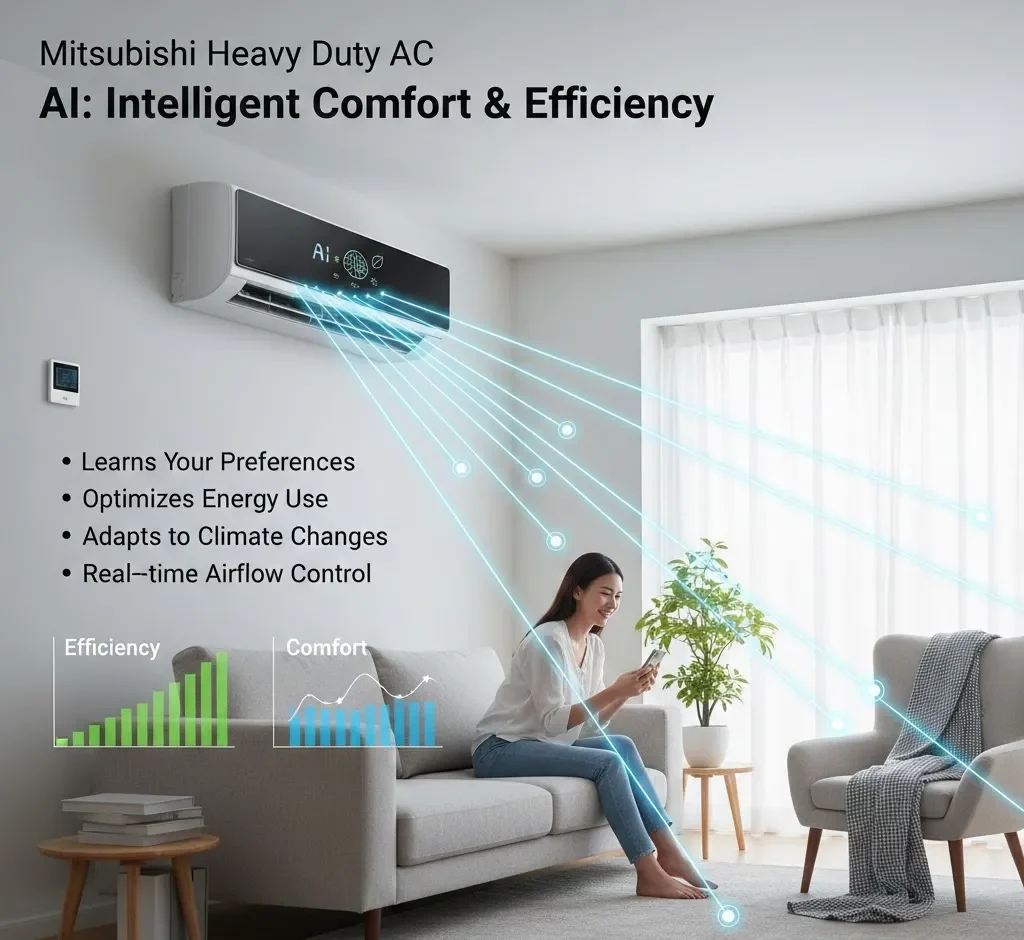
In today’s rapidly advancing technological landscape, air conditioning systems are no longer just simple machines designed to regulate temperature. Modern HVAC (Heating, Ventilation, and Air Conditioning) units, such as Mitsubishi Heavy Duty AC systems, are equipped with cutting-edge technologies that enable them to offer far more than just basic cooling. One of the most significant innovations in the field of air conditioning is the integration of artificial intelligence (AI). Mitsubishi Heavy Duty AC systems utilize AI to not only improve comfort but also enhance energy efficiency, saving businesses money in the long term.
In this article, we will delve into how Mitsubishi Heavy Duty AC uses AI to improve both comfort and energy efficiency, providing a seamless, cost-effective solution for commercial and industrial spaces.
The Role of AI in Mitsubishi Heavy Duty AC Systems
AI in air conditioning is not a concept of the future—it’s happening right now. With AI capabilities, Mitsubishi Heavy Duty AC systems are able to adapt to a wide variety of conditions and optimize their performance, ensuring that the air conditioning system works at peak efficiency while maintaining a consistent, comfortable environment. This goes far beyond simple temperature control.
Some of the ways Mitsubishi Heavy Duty AC systems utilize AI include:
- Predictive Climate Control
- Smart Energy Management
- Real-Time Adjustments Based on Environmental Data
- Maintenance Predictions and Diagnostics
- User-Centric Comfort Adjustments
Let’s take a deeper look at how AI powers these capabilities.
1. Predictive Climate Control
AI helps Mitsubishi Heavy Duty AC systems anticipate the cooling needs of a space, adjusting automatically before the temperature changes drastically. Instead of simply responding to temperature fluctuations, these systems analyze data in real time and adjust their settings proactively.
For instance, AI-based sensors track various environmental factors, such as indoor temperature, humidity, the number of people in a room, and even time of day. By learning usage patterns over time, the system can predict when the room will need cooling or heating and adjust the settings accordingly. This minimizes the chances of sudden temperature spikes or drops, providing a more comfortable and consistent environment for employees, customers, or residents.
Furthermore, predictive algorithms enable these systems to optimize the cooling process by adjusting airflow and compressor speed in anticipation of increased heat loads. This minimizes energy consumption during off-peak hours, when the building may not need as much cooling.
2. Smart Energy Management
One of the standout benefits of using AI in Mitsubishi Heavy Duty AC units is the ability to manage energy consumption intelligently. The AI system can analyze data from the building’s environment, such as occupancy levels, time of day, and weather forecasts, to adjust cooling output in the most energy-efficient way possible.
For example, if the building is empty or near-empty during certain times of day, AI can automatically lower the system’s output, reducing energy consumption without sacrificing comfort when the building is occupied. On the other hand, if AI detects an increase in occupancy or temperature due to external factors (such as sunlight), it can ramp up cooling just in time, ensuring the space remains comfortable without unnecessary overcooling.
AI also works in conjunction with inverter technology, which is a key feature in Mitsubishi Heavy Duty AC systems. The inverter adjusts the compressor speed based on real-time needs, rather than turning the compressor on and off constantly. By doing so, it reduces energy consumption while maintaining a consistent room temperature, ensuring the air conditioning system is only using energy when required.
The real-time data and adjustments powered by AI also enable the system to achieve higher energy ratings, improving the energy efficiency of large commercial spaces, industrial facilities, and offices.
3. Real-Time Adjustments Based on Environmental Data
AI-powered Mitsubishi Heavy Duty AC systems are designed to continuously monitor and adjust based on real-time environmental data. The AI system uses data from various sensors located throughout the building to assess the overall conditions. For instance, it evaluates not only the temperature but also factors like:
- Humidity levels
- Air quality (e.g., CO2 levels)
- Outdoor weather conditions
- Sunlight exposure
By collecting and processing this information, the AI can determine if cooling needs to be ramped up or if the system can scale back. For example, on a cloudy day, the building’s cooling load may decrease, and the system will use this information to reduce power consumption. On the other hand, during peak sunlight hours, AI will adjust the cooling power to ensure comfort.
Additionally, Mitsubishi Heavy Duty AC systems can be integrated with smart building systems, which allow for even more sophisticated adjustments. These systems can sync the air conditioning system with the lighting, heating, and ventilation systems, ensuring a truly optimized environment across the board. In a large office building, for instance, AI can work with the lighting system to reduce cooling demand by dimming lights when natural light is available, creating a more energy-efficient ecosystem.
4. Maintenance Predictions and Diagnostics
AI not only improves comfort and energy efficiency but also enhances the longevity of the Mitsubishi Heavy Duty AC units through predictive maintenance and diagnostics. Traditional air conditioning systems may require manual inspections to detect potential problems, such as refrigerant leaks, clogged filters, or mechanical wear.
AI, however, can predict maintenance needs before they become an issue. Using data gathered over time, the system can detect patterns that may indicate an impending failure or inefficiency. For example, AI might notice a slight change in energy consumption or compressor performance, flagging it as a potential issue that needs attention.
This predictive maintenance reduces the risk of downtime and emergency repairs, which can be particularly costly for businesses operating in large buildings. AI can also alert facility managers about the best times for scheduled maintenance, preventing unnecessary interruptions to business operations.
Additionally, AI diagnostics can help identify smaller, less obvious issues that may otherwise go unnoticed, such as minor malfunctions in sensors or airflow problems. This can extend the lifespan of the system and help it run at peak efficiency for years to come.
5. User-Centric Comfort Adjustments
The integration of AI into Mitsubishi Heavy Duty AC systems also means a higher level of customization for users. AI can learn individual preferences for temperature and air quality, automatically adjusting settings based on the user’s behavior. For example, in a commercial office building, the system can learn the preferred settings for different rooms at various times of the day. AI can adjust the temperature in conference rooms before meetings and ensure that employees’ individual workstations are always at an optimal comfort level.
Furthermore, AI-based systems in Mitsubishi Heavy Duty AC units can interact with mobile apps or smart devices, allowing users to manually override AI settings if necessary. If a building manager wants to make specific adjustments due to an event or meeting, they can quickly do so via an app, giving them full control while still benefiting from AI-powered automation.
Conclusion
The integration of AI into Mitsubishi Heavy Duty AC systems has revolutionized the way air conditioning works in commercial and industrial environments. By leveraging predictive climate control, smart energy management, real-time adjustments based on environmental data, maintenance predictions, and user-centric comfort adjustments, these systems offer unmatched performance, energy efficiency, and comfort.
In addition to providing a more comfortable environment, Mitsubishi Heavy Duty AC units equipped with AI can significantly lower operating costs for businesses, making them a wise investment for companies looking to optimize their HVAC systems. With AI continuing to evolve, the future of air conditioning looks brighter than ever, offering smarter, more efficient solutions for a wide variety of industries.
By utilizing the power of AI, Mitsubishi Heavy Duty AC systems aren’t just keeping spaces cool—they’re transforming how businesses manage energy, optimize performance, and improve overall comfort.